
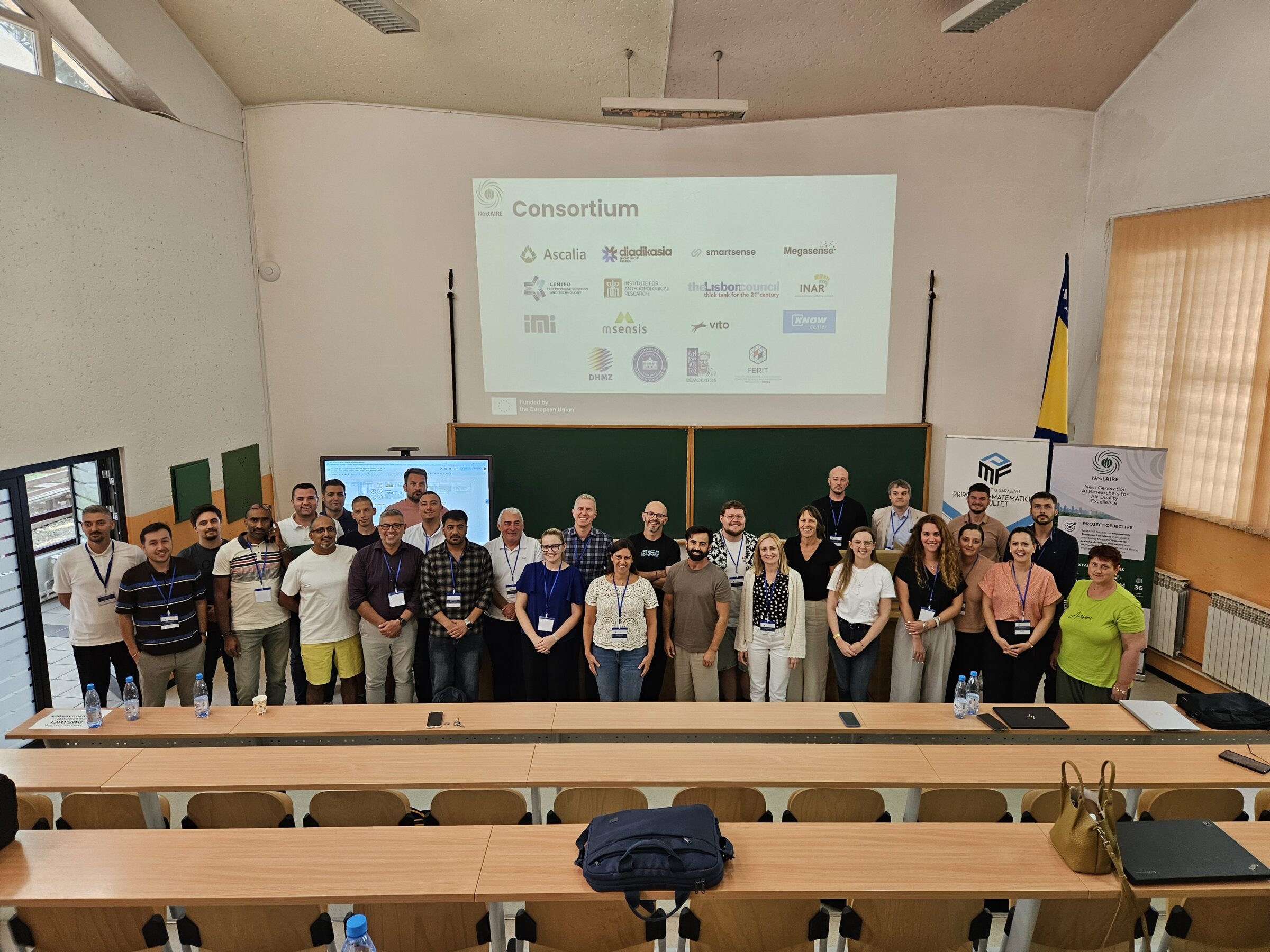
The NextAIRE Sarajevo Summer School and Project Meeting, held from 7 to 9 September 2026 at the University of Sarajevo – Faculty of Science, brought together project partners, researchers, invited experts and stakeholders for three intensive days of training, knowledge exchange, project coordination and networking.
Organised by the University of Sarajevo – Faculty of Science, Department of Chemistry, together with the Faculty of Electrical Engineering, Computer Science and Information Technology Osijek (FERIT), the event combined scientific and technical training with practical discussions on Artificial Intelligence, air quality, project implementation, secondments and collaborative research.
Day 1 – Air Quality Monitoring and Hard Skills
The first day of the Summer School focused on the scientific and technical foundations of next-generation air-quality monitoring.
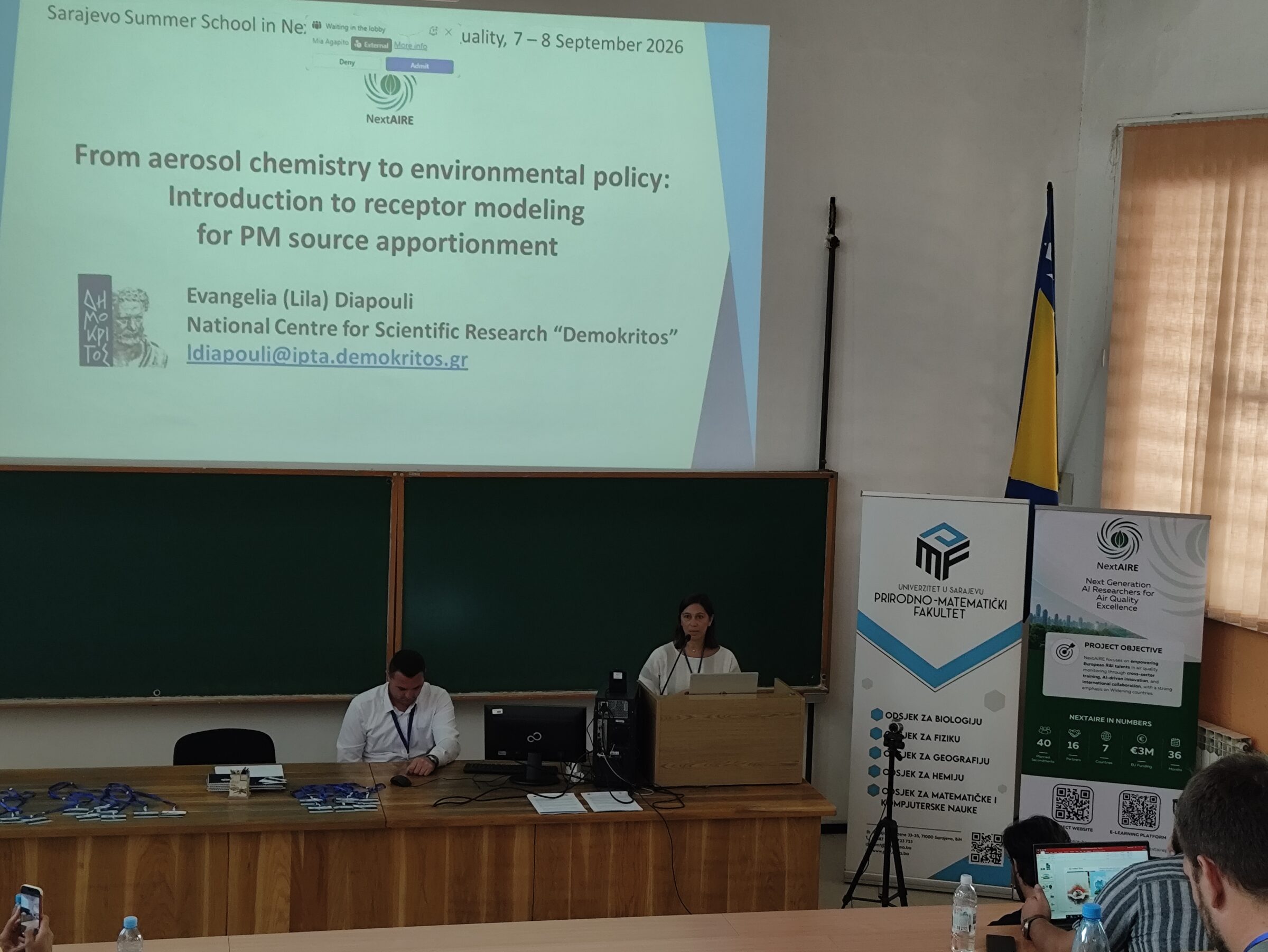
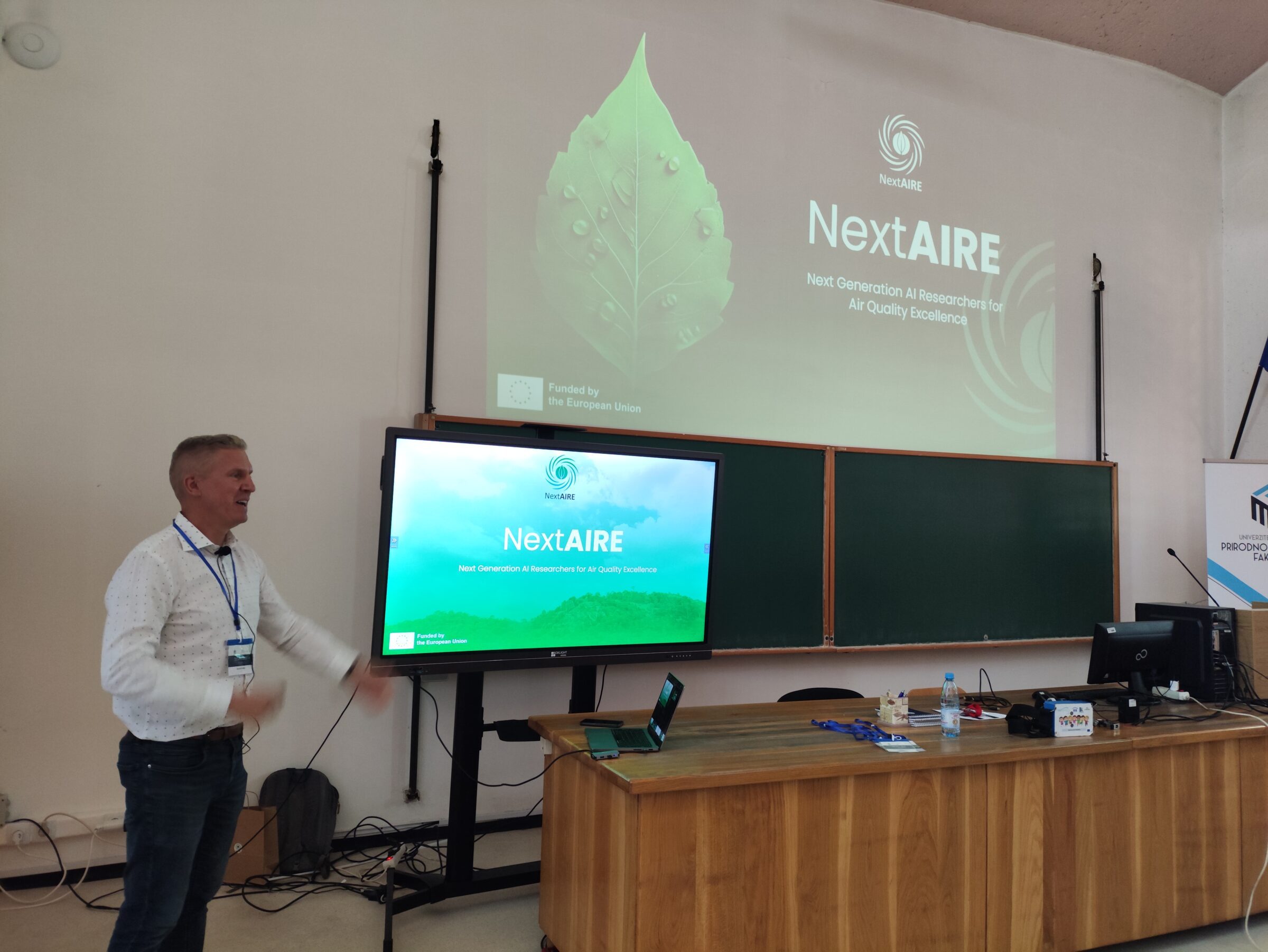
Following the official welcome by representatives of the University of Sarajevo and the NextAIRE project, invited experts presented current challenges and developments in air-quality research.
The keynote programme addressed topics including air-quality monitoring in Bosnia and Herzegovina, particulate matter source apportionment, aerosol chemistry and urban particle formation.
The programme then continued with a series of hard-skills sessions covering a wide range of practical topics, including:
- air-quality measurements and basic concepts,
- sensor reliability,
- low-cost sensors supported by machine learning,
- environmental intelligence,
- air-quality management,
- IoT-based environmental monitoring,
- mobile measurements,
- air sampling and data interpretation.
The combination of scientific presentations and practical examples gave participants the opportunity to exchange experience across different disciplines and better understand how new technologies can support more effective air-quality monitoring.
Participants also had the opportunity to visit the Faculty and its research laboratories, creating an additional link between the scientific sessions and the practical research environment.
Day 2 – Artificial Intelligence, Data Tools and Co-Creation
The second day moved from air-quality fundamentals towards Artificial Intelligence, data analysis and practical digital tools.
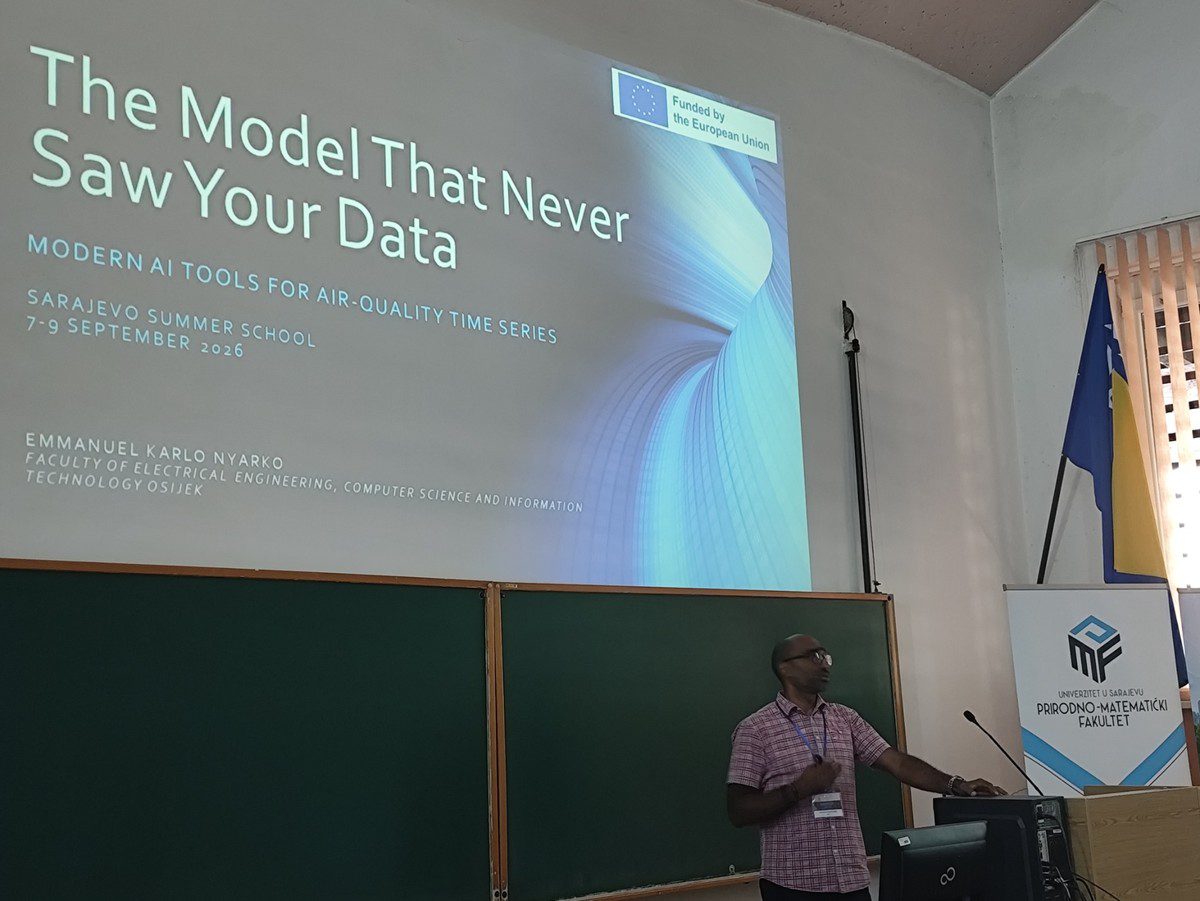
The morning hard-skills sessions covered neural networks, the NextAIRE Data Platform, AI challenges, local Large Language Models, modern AI tools for air-quality time series and geographical approaches to air-quality monitoring and mapping.
A key part of the day was the Co-Creation Activity on the NextAIRE Competency Framework. Through this activity, participants contributed their perspectives on the knowledge and skills needed by researchers working at the intersection of Artificial Intelligence, environmental science and air-quality monitoring.
The afternoon programme broadened the discussion beyond technical research through a series of soft-skills sessions.
Topics included:
- product development,
- AI and digital transformation,
- turning research results into products,
- science-to-policy translation,
- and intercultural cooperation.
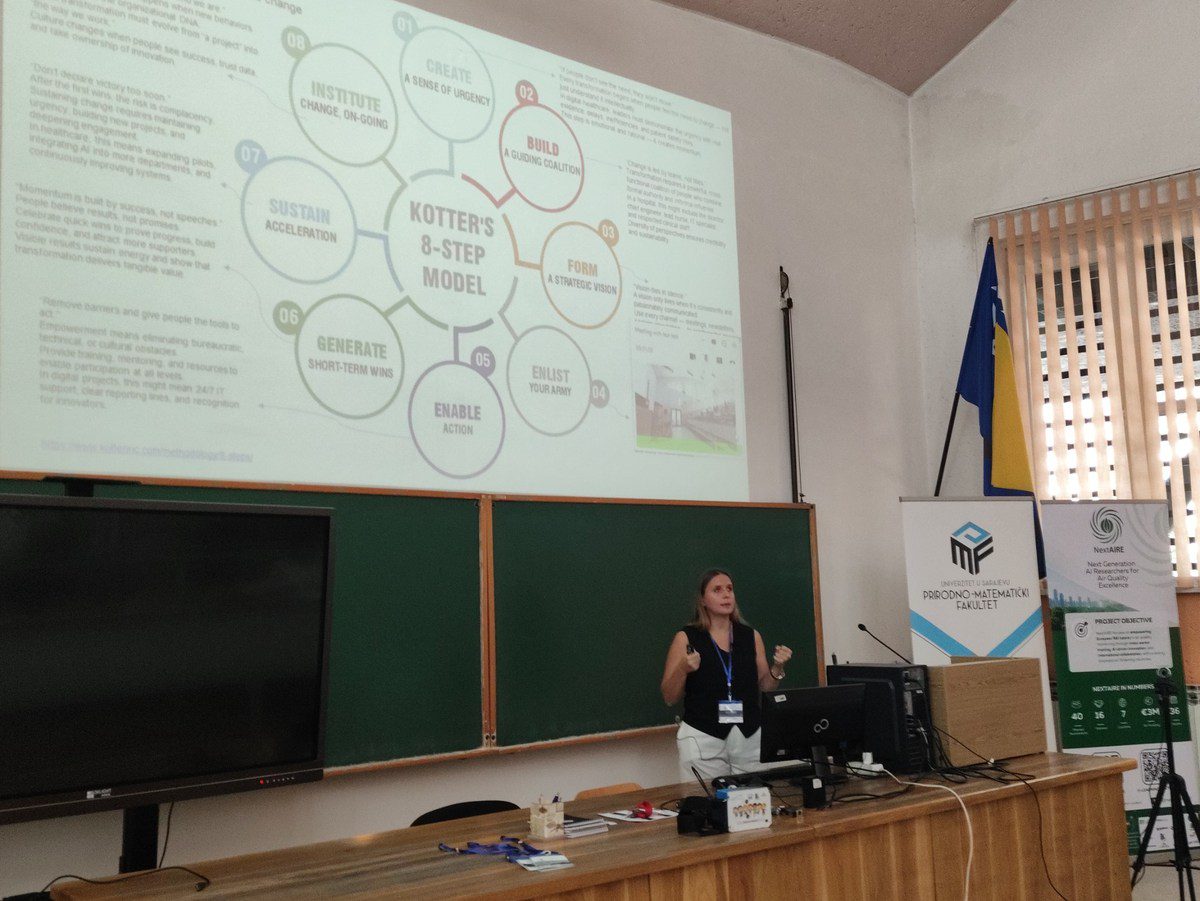
This combination of technical and transferable skills reflects one of the key aims of NextAIRE: supporting researchers not only in developing scientific expertise, but also in strengthening the wider skills needed for collaboration, innovation and career development.
The day concluded with a networking event and guided tour of Sarajevo, providing an informal setting for project partners, invited speakers and participants to continue discussions, exchange ideas and strengthen professional connections.
Day 3 – NextAIRE Project Meeting
The final day was dedicated to the official NextAIRE Project Meeting.
The programme began with a project coordination session led by Dr Mario Lovrić and Jon Switters, covering project progress, KPIs, deliverables and the first reporting period.
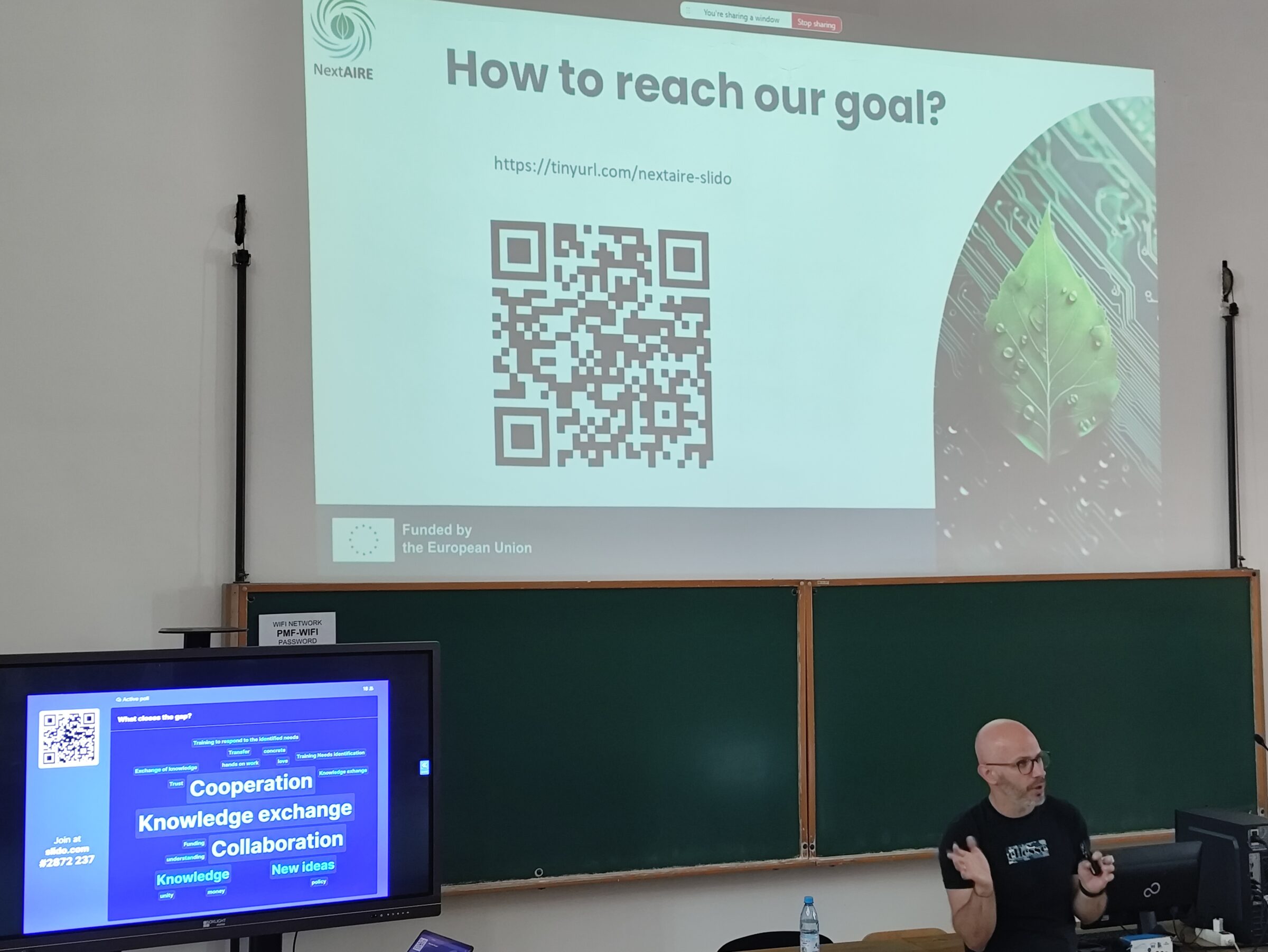
This was followed by dedicated Work Package updates, giving the consortium a common overview of progress across the different areas of NextAIRE.
The presentations covered:
- the NextAIRE Competency Framework,
- development of AI infrastructure,
- training and education activities,
- teamwork and collaborative research,
- and communication, dissemination and outreach.
These discussions helped partners review the progress achieved during the first project year and align activities for the next phase of implementation.
Secondments and Collaborative Projects
A major part of the afternoon was dedicated to partner presentations on secondments and collaborative projects.
Partners shared information on completed, ongoing and planned activities, presented the objectives and experience gained through the secondments, and discussed opportunities for further cooperation.
The presentations showed the diversity of mobility and collaborative activities taking place across the consortium, ranging from knowledge and skills exchange to collaborative research and the use or development of shared platforms and tools.
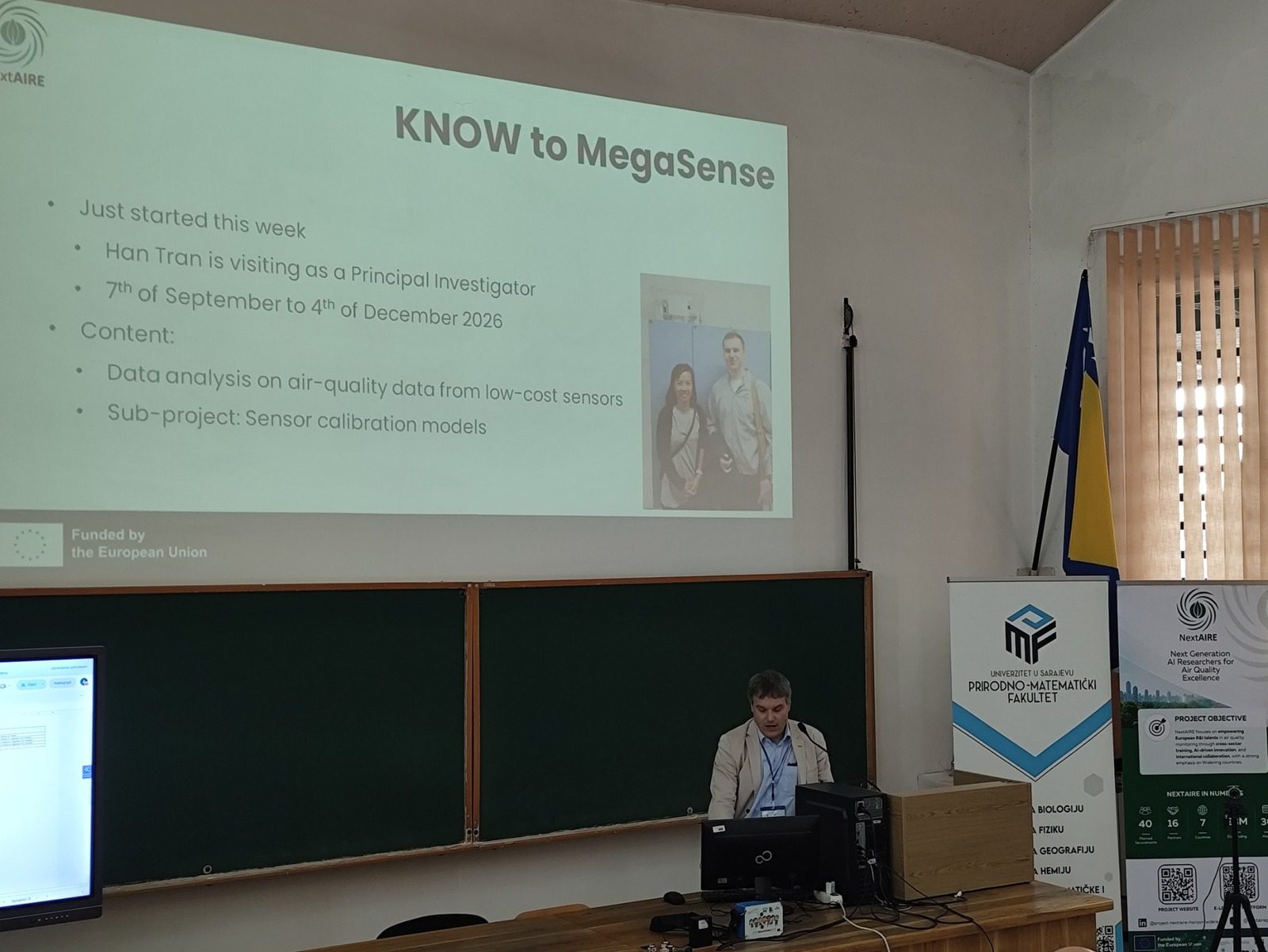
The session also helped the consortium build a clearer overview of the different forms of collaboration taking place within NextAIRE and identify areas where additional information, coordination or follow-up actions may be needed.
This exchange was particularly valuable for strengthening coordination between partners and supporting the next phase of secondment and collaborative research activities.
Discussion and Next Steps
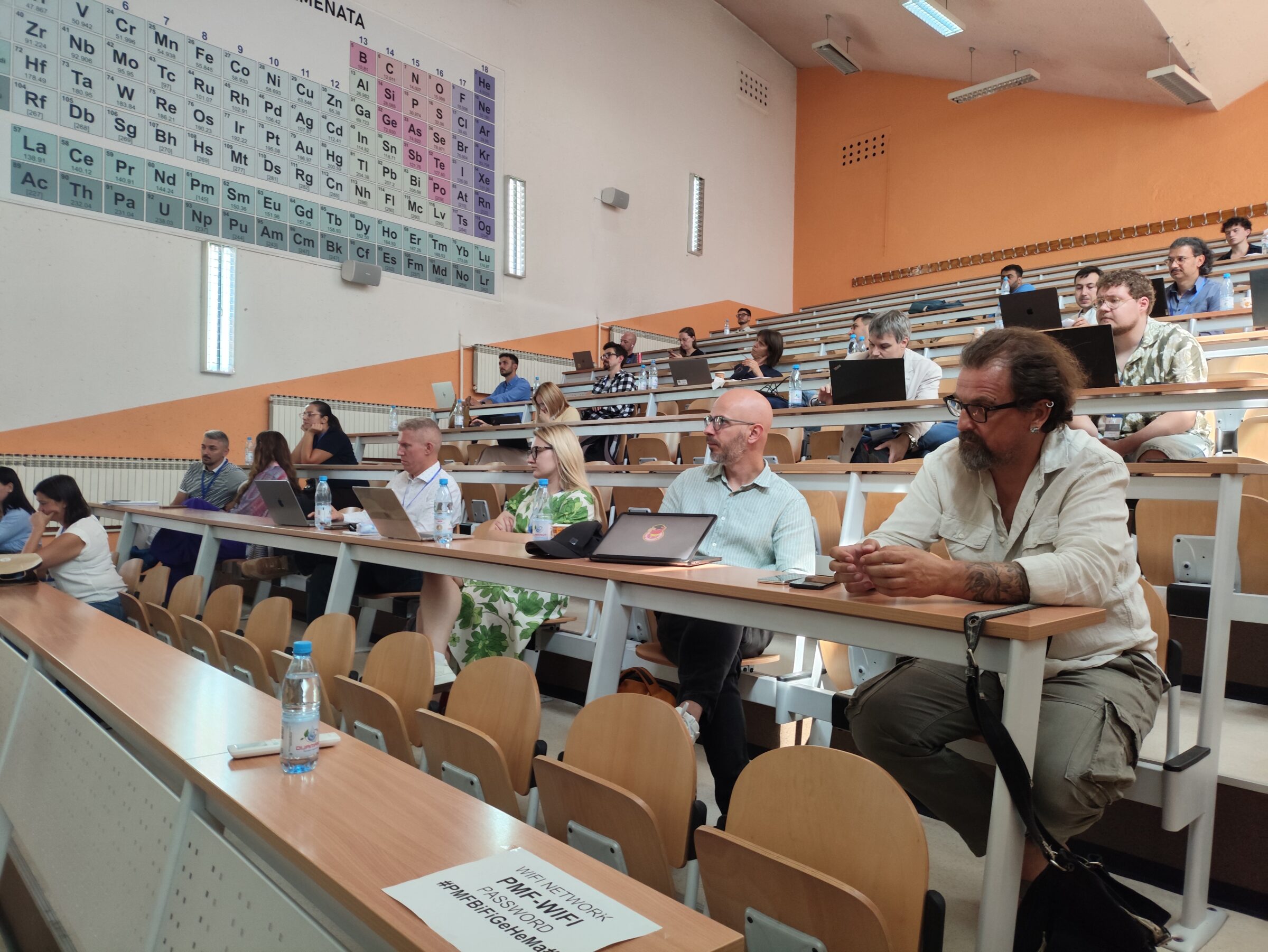
The meeting concluded with an open discussion focusing on how to further improve project activities, strengthen participation and increase the impact of the work being carried out across the consortium.
The discussion provided an opportunity to reflect on progress achieved during the first year, identify areas requiring further attention and align partners around the priorities for the next project period.
As NextAIRE enters its second year, the consortium will build on the experience gained during the first period, continue implementing the planned secondments and collaborative activities, strengthen communication and stakeholder engagement, and prepare for the upcoming project review.
Three Days of Learning, Collaboration and Exchange
The Sarajevo event successfully brought together several important dimensions of NextAIRE:
- scientific and technical training,
- Artificial Intelligence and air-quality applications,
- practical and transferable skills,
- co-creation and knowledge exchange,
- project coordination,
- secondments and collaborative research,
- communication and dissemination,
- and networking across the consortium.
Beyond the formal programme, the event also created valuable opportunities for informal exchange and team building, helping to strengthen the connections between project partners, invited speakers and participants.
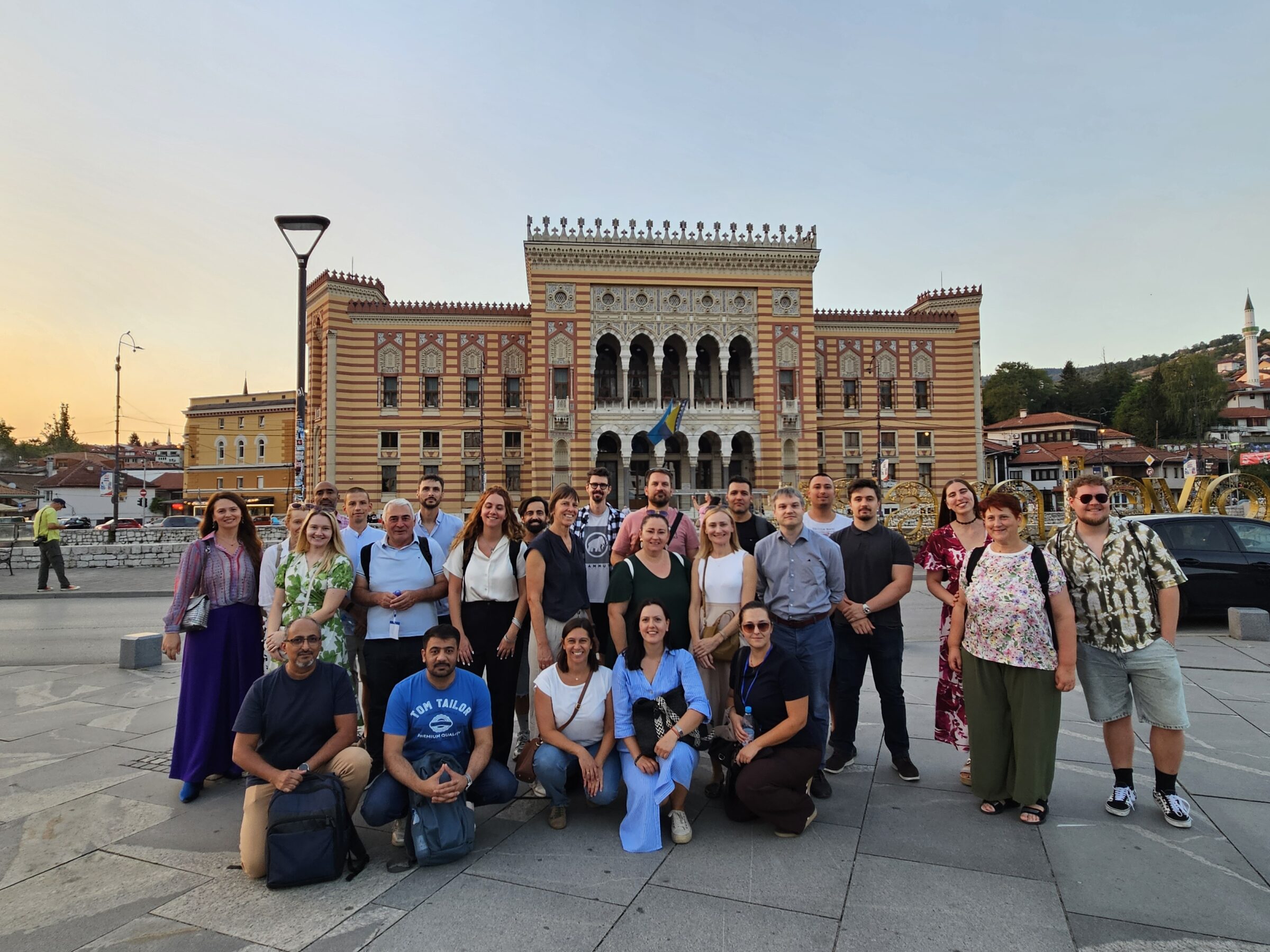
A special thank you goes to Dr Sabina Žero and the University of Sarajevo – Faculty of Science team for their excellent organisation, continuous support and warm hospitality throughout the event.
We also thank all invited speakers, project partners and participants for their active contribution and engagement during these three days.
The NextAIRE consortium leaves Sarajevo with new knowledge, stronger connections and a clear focus on the next steps ahead.
Stay tuned for more highlights, photos and videos from the NextAIRE Sarajevo Summer School and Project Meeting.